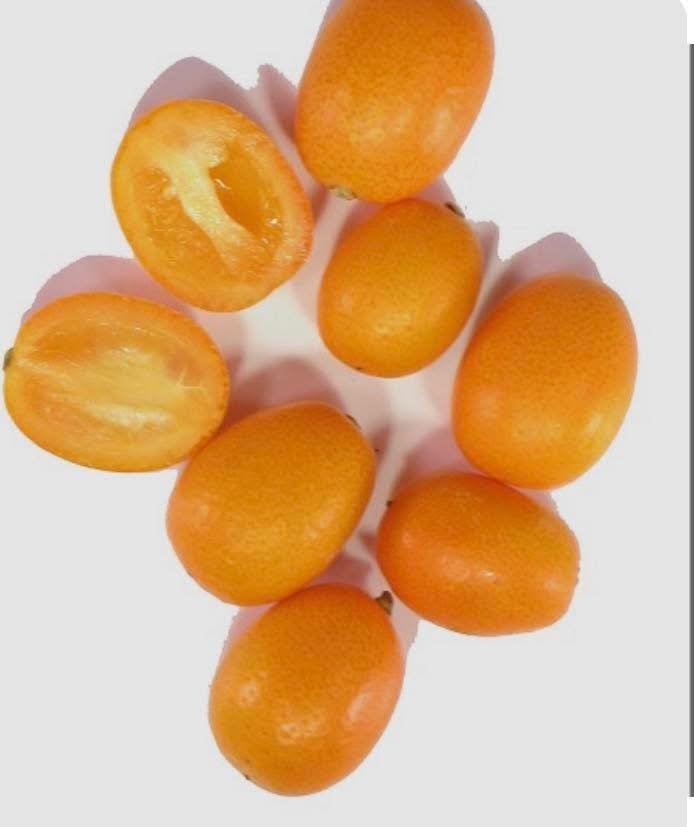
Citrus japonica is the scientific name for the kumquat, a small, sweet-and-tart fruit native to East Asia. Unlike most citrus fruits, kumquats are eaten whole, including the peel, which is sweet, while the flesh inside is tart.
Key Facts about Citrus japonica (Kumquat)
- Family: Rutaceae (citrus family)
- Origin: China, though now cultivated worldwide in subtropical regions
- Fruit: Small, oval or round (about 1–2 inches), bright orange when ripe
- Taste: Peel is sweet; pulp is tangy and slightly sour
- Uses:
- Eaten raw, whole
- Candied or preserved
- Made into marmalade, jellies, sauces, or cocktails
- Growing conditions:
- Prefers warm, subtropical climates
- Needs well-drained soil and full sun
- Can be grown in pots in cooler climates
💡 Fun fact: Unlike most citrus fruits, the kumquat’s peel is sweeter than its flesh, so people often bite into it whole, peel and all.
If you want, I can also list the different varieties of Citrus japonica and how their flavors differ. Do you want me to do that?
