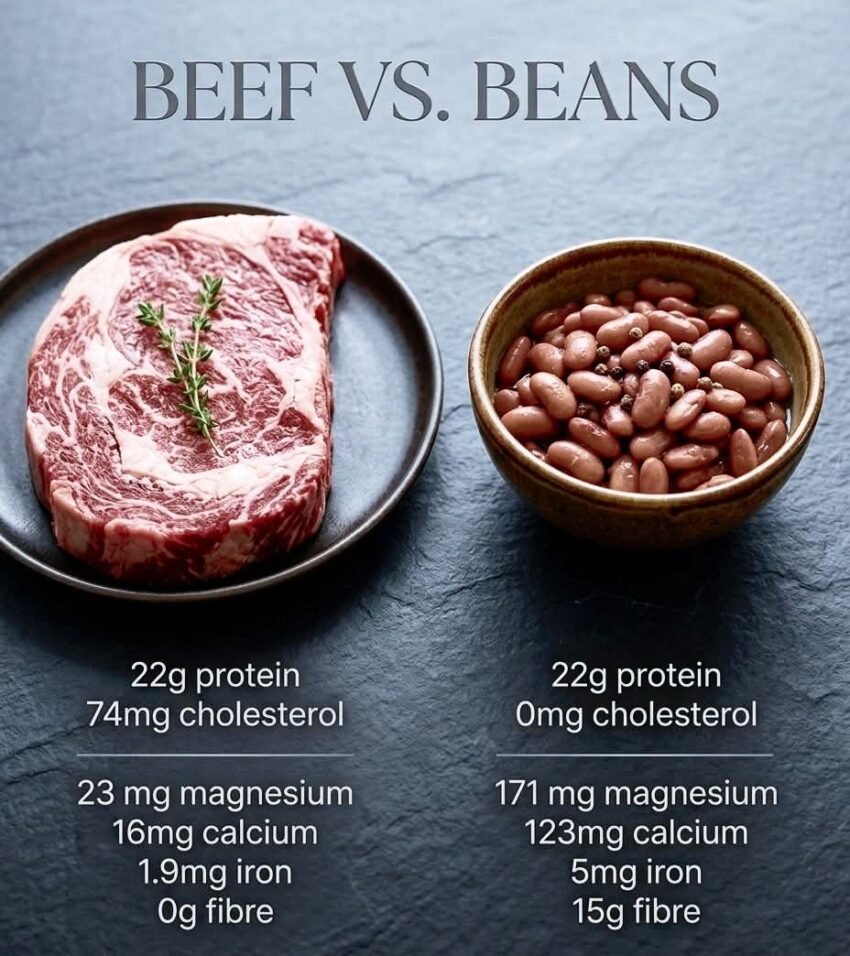
Beef vs. beans can refer to comparing the two as sources of protein, nutrients, and culinary uses. Here’s a detailed look:
1. Nutrition
| Nutrient | Beef (100g cooked) | Beans (100g cooked, e.g., black beans) |
|---|---|---|
| Protein | ~26g | ~8g |
| Fat | ~15g (mostly saturated and monounsaturated) | ~0.5–1g |
| Calories | ~250 kcal | ~120 kcal |
| Fiber | 0g | ~6–8g |
| Iron | ~2.6mg (heme iron, easily absorbed) | ~2mg (non-heme, less absorbed) |
| Vitamins | B12, B6, niacin, zinc | Folate, magnesium, potassium |
| Cholesterol | ~90mg | 0mg |
Key Takeaways:
- Beef is high in complete protein and rich in B12 and heme iron.
- Beans are lower in calories and fat, high in fiber, and contain plant-based protein and micronutrients.
2. Culinary Uses
- Beef: Stews, roasts, burgers, stir-fries, tacos, steaks.
- Beans: Soups, chili, salads, burritos, veggie patties, side dishes.
3. Environmental & Cost Considerations
- Beef has a higher environmental impact (greenhouse gases, land, water use) and is often more expensive.
- Beans are more sustainable, plant-based, and budget-friendly.
4. Health Considerations
- Lean beef in moderation can be part of a healthy diet.
- Beans are excellent for heart health, blood sugar control, and digestive health due to their fiber content.
Summary:
- Choose beef when you want high-quality protein and iron, especially for muscle-building or iron-deficiency diets.
- Choose beans for a low-fat, high-fiber, plant-based protein source, especially for heart health or vegetarian diets.
I can also make a “beef and beans combined” recipe list that maximizes protein while keeping calories moderate if you want meal ideas. Do you want me to do that?
