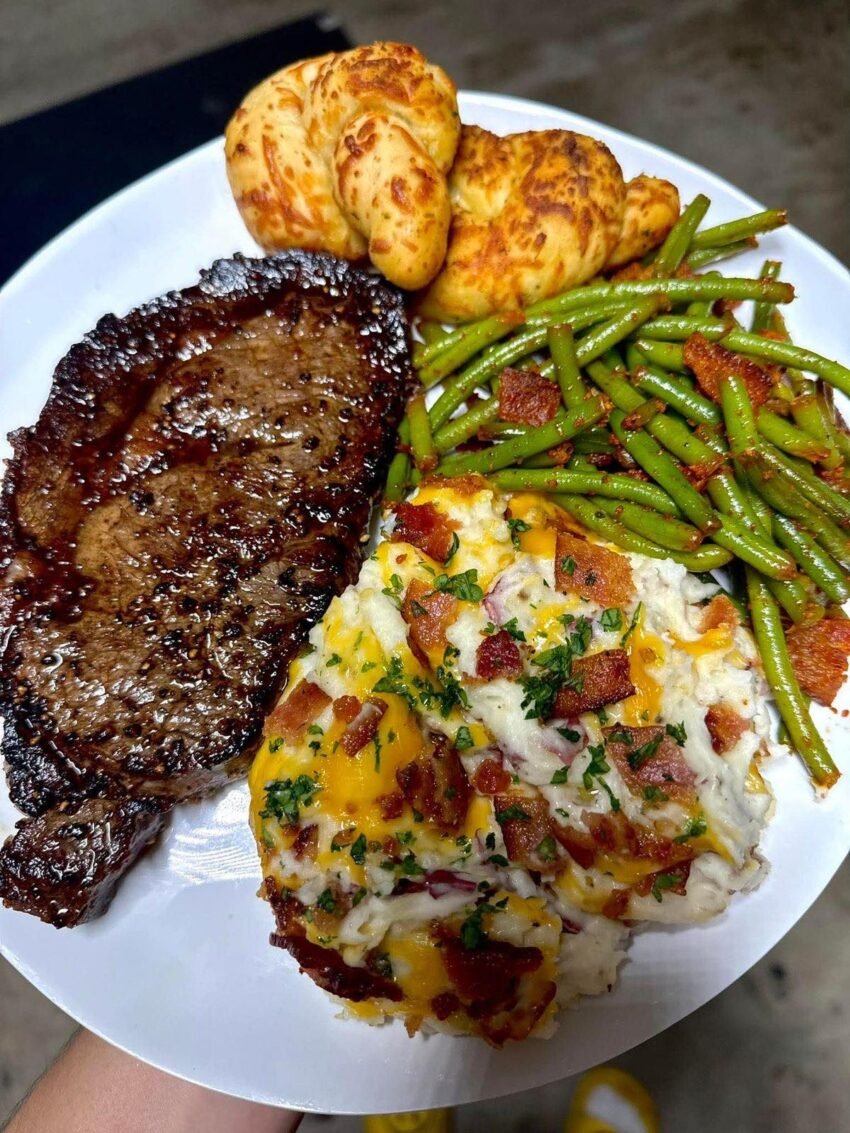
Ah, ribeye steak—a true icon of juicy, flavorful beef! 🥩 Let’s break it down thoroughly:
1. What It Is
- Cut: Comes from the rib section (ribs 6–12) of the cow.
- Texture & Flavor: Very marbled with fat, making it tender, juicy, and flavorful.
- Grades: USDA Prime, Choice, or Select; more marbling = richer flavor.
2. Types
- Bone-in Ribeye (Rib Steak): Extra flavor from the bone.
- Boneless Ribeye: Easier to cook evenly and carve.
3. Cooking Methods
- Pan-Seared:
- Preheat heavy skillet (cast iron ideal).
- Sear 3–5 min per side depending on thickness.
- Optional: Add butter, garlic, and herbs near the end.
- Grilled:
- Medium-high heat.
- 4–6 min per side for medium-rare (depends on thickness).
- Oven-Finished (Reverse Sear):
- Slow roast at 250–275°F until 10°F below desired doneness.
- Sear in hot pan or grill for crust.
4. Doneness Guide
- Rare: 120–125°F
- Medium-rare: 130–135°F ✅ (most recommended for ribeye)
- Medium: 140–145°F
- Medium-well: 150–155°F
5. Resting
- Rest 5–10 minutes after cooking to let juices redistribute.
6. Serving Tips
- Serve plain to enjoy beef flavor or with herb butter, chimichurri, or a simple pan sauce.
- Pair with roasted vegetables, mashed potatoes, or a fresh salad.
If you want, I can give you a perfect step-by-step method to cook a 1–1.5 inch ribeye steak to juicy medium-rare, including timing, pan temp, and seasoning tricks. It’ll come out restaurant-level every time.
Do you want me to do that?
